Essential Off-Season Maintenance Tips for Optimal Performance
The changing of the seasons brings about a lot of different work. Your RV likely is not getting as much use. It needs attention during the off-season to stay in good condition. Following a few simple maintenance tips during this period can make a big difference. One must never forget that for it to run well when you need it, regular off-season care is essential to keep the unit operating smoothly. Proper upkeep will also help preserve its overall value if you decide to sell it in the future.
Off-season maintenance is often neglected by many recreational vehicle (RV) owners. These owners may not realize the importance of tending to their vehicles during the winter. They may assume that their RVs can sit idle without much consequence. But when not in use, RVs are much more prone to severe weather and also to pests.
Without a doubt, these are some of the biggest enemies of RV owners. When you are not using your RV, make sure you are keeping it properly maintained to prevent it from falling into disrepair. If your RV is neglected, you will be disappointed by the price of the repairs and the performance of the RV once the travel season arrives.
If you follow these tips for RV maintenance in the off-season, you can look after the money you've tied up in your vacation vehicle and enjoy traveling any time of year without worry. By taking care of our RVs in the off-season, we can avoid most of the worry associated with what could go wrong while we are on the road traveling.
What To Do Before Leaving Your Vehicle in Storage Unit
1. Conduct a Comprehensive Inspection
Examine your RV from top to bottom. Look for signs of damage, leaks, or wear. Put your eyes on every part of the roof, every seal, and every window. Inspect the exterior surfaces of the vehicle and make needed repairs promptly.
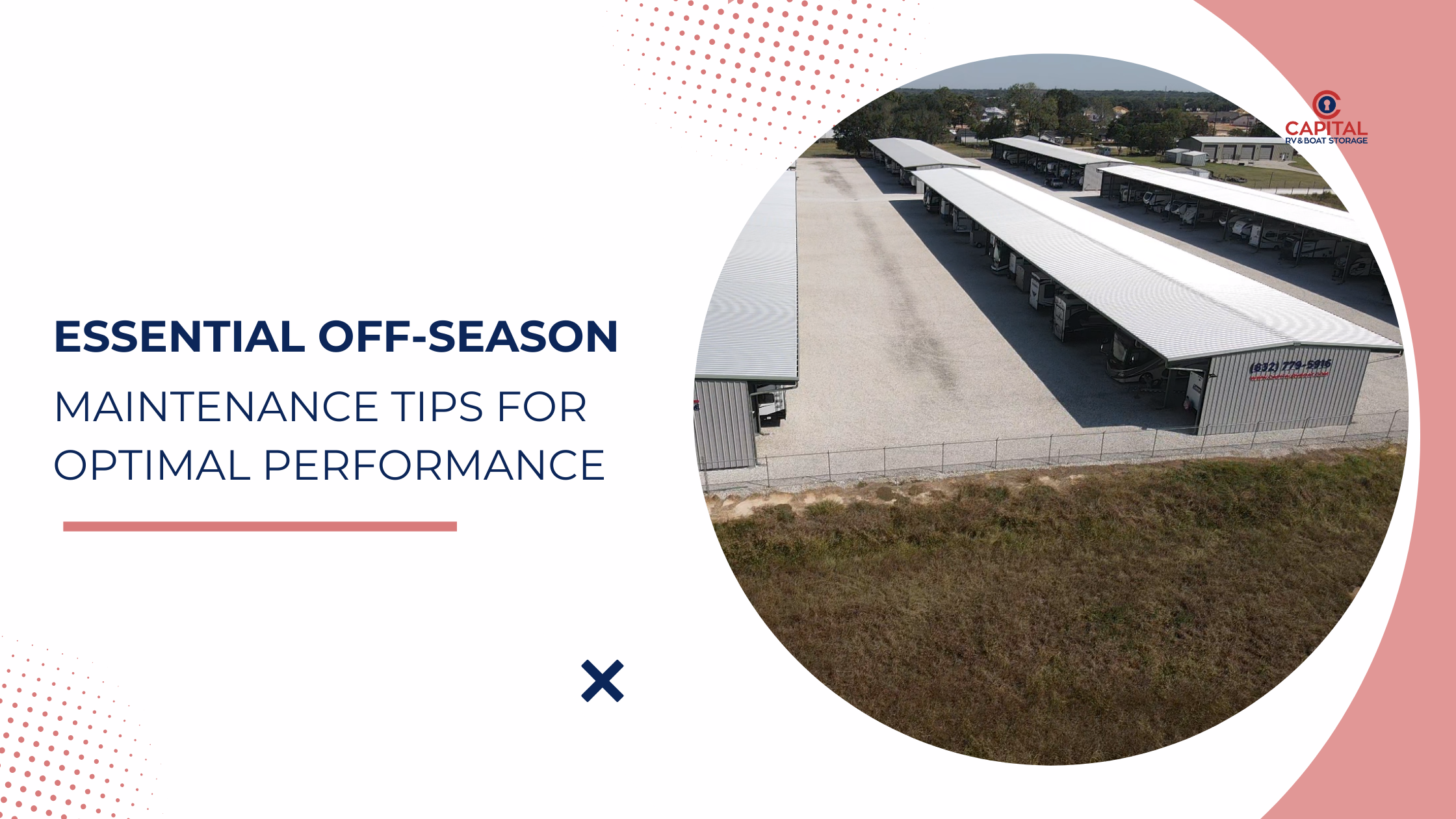
Be sure to tidy up not just inside your RV, but the outside as well. A good washing and waxing will remove any stubborn dirt and provide a protective residential shield for the sides and top. After that, do a thorough check of all exterior seals, from the windows and bodywork right up to the roof, to ensure they're watertight. When not in use, consider using an RV cover or carport to protect the top and windows from UV damage; they'll also provide shade to help keep the interior and exterior of the RV cool.
Don't forget to give the engine and fluids a good going-over when winterizing your RV. Inspect the belts and battery. Clean and degrease the engine. Change the oil and filters. Check the fluid levels. Inspect the power steering and engine coolant hoses for any signs of wear or cracking. If they're past due for replacement, do it before you start any long-term vehicle storage solution. Also, fill the gas tank, add some fuel stabilizer, and run your generator for a while to prevent fuel line problems over the winter.
2. Maintain the Inside of Your Camper
Keep the inside of your RV clean and in an orderly condition. Do not leave behind any open food, boxes of either opened or unopened food, or any commercial goods items which might attract pests. Moisture is a big enemy here, too; either eliminate it or control it and anything in the bathroom area which could cause mold. Clean and sanitize anything in the bathroom space which could potentially add to the problem of pests on the grounds of your RV.
What Not To Neglect After Coming From Off-Season
1. Don’t Neglect Your Tires
Neglecting tire upkeep in the off-season is a big mistake a lot of people make. You need to realize that this is an incredibly important aspect of the storage process. Be sure to check the conditions of your tires often, and always before you hit the road. You should be checking the condition, the pressure, and the tread depth of your tires. It's key that you let your tires come out of the vehicle storage facility in good shape. You certainly don't want to be dealing with a big, unsafe problem before your next trip.
In the off-season, it is essential to look after your RV's batteries. Either disconnect or completely remove them when the vehicle is not in use. If you prefer, use a charger—a very small "smart" charger, not a high-amperage one—to keep them charged if you like. Oftentimes a charger will come with a "maintain" option. Use that. Never let batteries just sit.
3. Don’t Underestimate Pest Prevention
Pests are a very real and ever-present threat when it comes to a stored RV. The risk of a pest infestation can mean the literal end of the road, in terms of the RV being used again. If you have access to sonic pest-protective devices, then those can certainly be better than the old-school type of poisons for your stored RV.
4. Don’t Procrastinate Repairs
The worst thing for an RV or any vehicle is neglect. If something is broken, fix it. Don't wait until it's convenient, because, sadly, the day may never come when it is convenient. If you neglect the repairs, the problems can worsen or cause even more issues.
You should never ignore standard and regular checkups. That's because these commonplace checkups are the first line of defense against the types of problems that can stop an RV cold in its tracks and, if not addressed, may take a fair amount of time and money to resolve—time and money you'd probably much rather spend on the "open road" than in the "shop" or "garage."
FAQs
Some basic maintenance tips include inspecting the roof and seals, checking fluid levels, cleaning the interior, and disconnecting the battery if the RV will not be used for a long time. These steps help keep the vehicle in good condition until the next travel season.
Following simple maintenance tips before storing your RV can help prevent issues such as battery drainage, tire damage, moisture buildup, or pest problems. Preparing the vehicle properly ensures it is ready to use when you take it out again.
RV owners should review basic maintenance tips at the start of the off-season and check the vehicle occasionally while it is stored. Regular checks help identify small problems early and keep the RV running smoothly for future trips.
Conclusion
In summary, taking care of your RV during the off-season plays an important role in keeping it in good condition for years to come. This period is the perfect opportunity to follow important maintenance tips and handle routine upkeep that may have been postponed during busy travel months. It is also the right time to plan where you will store your RV until the next trip.
Choosing a reliable storage facility can help ensure your vehicle stays protected while it’s not in use. At Capital RV & Boat Storage, RV owners can keep their vehicles in a secure and accessible place while they wait for the next adventure to begin.
EXPLORE MORE RELEVANT BLOGS
RV Storage Prices Near Me: Comparing Options and Amenities